Ode to Strawberry
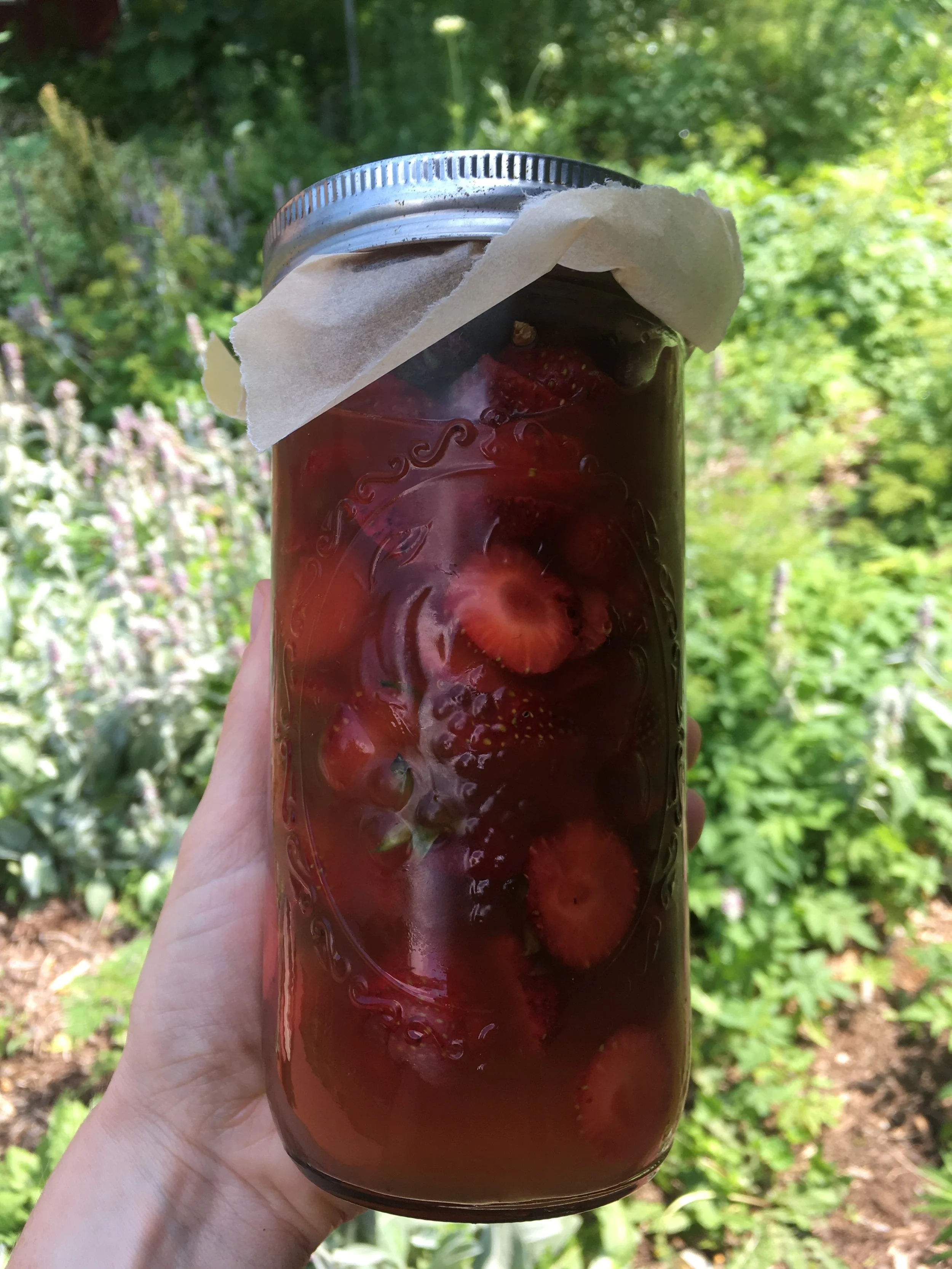
A Strawberry oxymel in the works
This is an old post from 2021 that I’m re-publishing for strawberry season!
Please note that the following statements have not been approved by the FDA. They are for educational purposes only and should not be construed as individual medical advice. Thoroughly research any herb you plan on ingesting and be sure there are no contraindications for you, especially if you’re on medication or have a medical condition, or you’re pregnant, nursing, or trying to conceive.
Who doesn't love a sun-warmed strawberry on a June afternoon? While strawberries can be found in grocery stores any time of year—even in the dead of winter—there's nothing quite like a freshly picked berry from the garden (or from the wild if you’re lucky).
Like so many plants that bloom and fruit during a small window of time here in Wisconsin, strawberries have become a celebrated symbol of the season, heralding the arrival of the most delightful time of year. And like the strawberry, summer here is short, sweet, and fleeting—making it all the more important to slow down and savor its fruits.
The benefits of the Strawberry plant:
Well-known as a food, beloved strawberry is also an herb. Strawberry (fragaria spp.) is a member of the rose family and the entire plant is medicinal. Similar to its cousin raspberry, strawberry leaves are astringent to the tissues. When made into tea, the leaves are considered to be anti-inflammatory to the liver, kidneys, and bowel, and were traditionally used to treat diarrhea, dysentery, gout, and to stop bleeding. They also contain mild diuretic properties and acidify the urine, making them helpful for some infections of the urinary tract.
Tea made from both the leaves and roots has been used to heal wounds, ulcers, and inflammation of the mouth and skin. Similar to raspberry, strawberry leaves are considered to be a uterine tonic and may be helpful for addressing symptoms associated with menstruation, pregnancy, and fertility.
The ripe fruit is cooling and moistening to the tissues, and contains a wide range of benefits. The berries are highly nutritive and can be eaten as a digestive tonic. They're an excellent source of vitamin C, as well as fiber, folate, magnesium, calcium, phosphorus, potassium, vitamin K, and an abundance of antioxidant compounds. Strawberries have been shown to improve insulin sensitivity, reduce musculoskeletal inflammation, and are protective to the cardiovascular system.
Like its leaves, the berries also contain diuretic and laxative properties and may be helpful for addressing imbalances of the urinary and lower digestive tracts. Historically, strawberries were consumed to treat summer colds, sore throats, dry coughs, and other respiratory ailments. And in the 1800s, strawberry fasts were prescribed for the treatment of gout.
✿
Heart-shaped, stunningly red, sweet and succulent, strawberries are associated with love and sensuality. The tender berry invokes Venus, Freya, and other goddesses of fertility. In Christianity they became associated with the Virgin Mary—their lack of thorns was interpreted as a symbol of innocence and purity.
Strawberries also play an important role in several Native American creation stories (I highly suggest reading Robin Wall Kimmerer's writing on the gift of strawberries in her book Braiding Sweetgrass). And while I'm no expert in strawberry myth and symbolism, given their long history of use as food and medicine around the world (most regions of the globe have their own native strawberry), I wouldn't be surprised if they've made their way into craft, art, and stories everywhere.
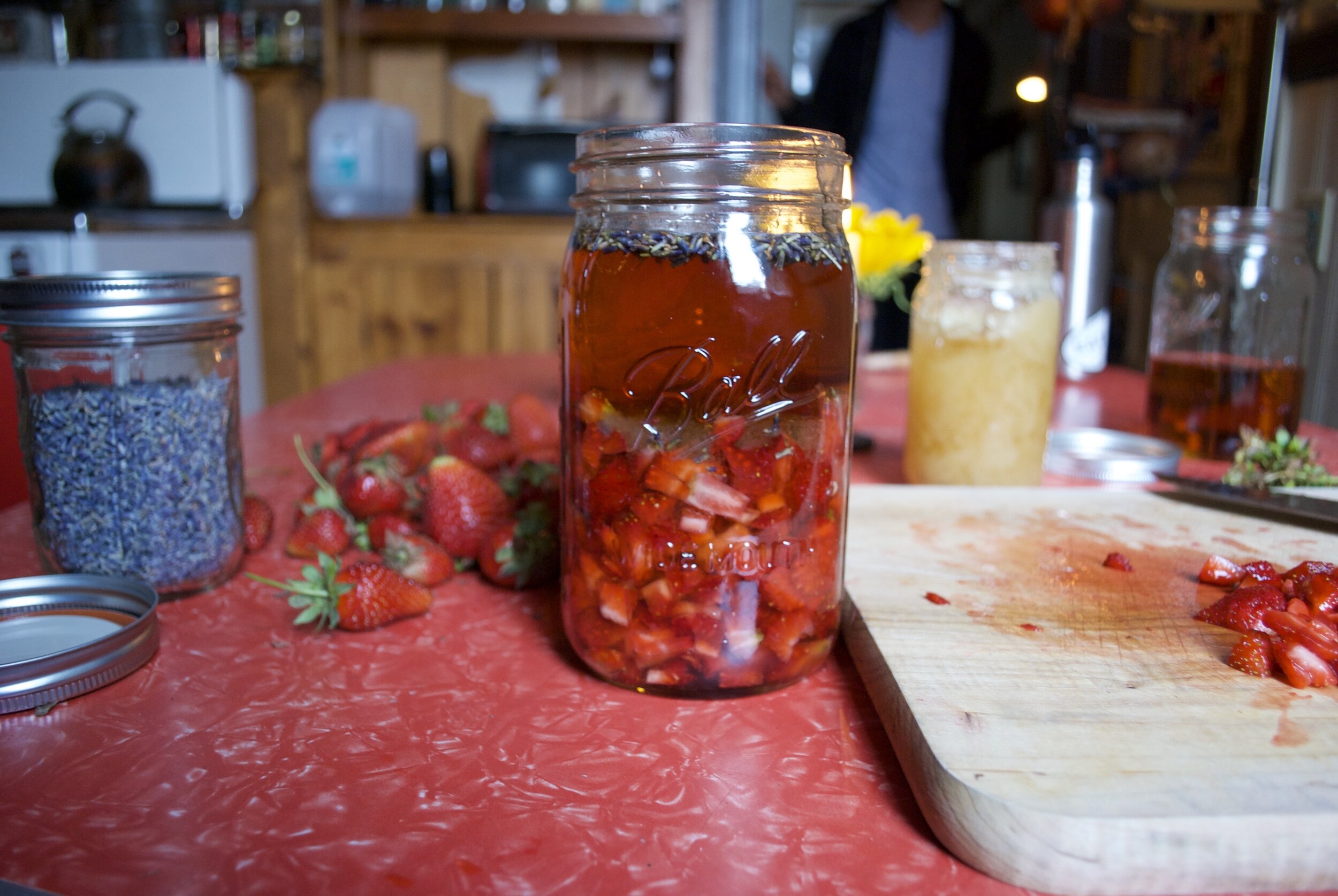
Strawberry lavender cordial being made several years back.
Ways to enjoy Strawberry:
In addition to the typical summer strawberry treats we all know and love, there are several ways I like to enjoy strawberry—in particular, I like to preserve them along with other herbs by making cordials, oxymels, and syrups.
A cordial is a sweetened distilled spirit flavored with fruit or herbs, and they’re intended to be enjoyed in small doses either on their own as a beverage, or mixed into other drinks. It’s really easy to make strawberry cordial. Simply fill about 2/3 of a jar with freshly chopped strawberries and any other fresh fruits or herbs you enjoy (see below for ideas), then cover the strawberries with a mixture of alcohol and honey or sugar (about 3 parts alcohol, 1 part honey or sugar). You’ll want to use an alcohol that tastes ok on its own—I like to use local apple brandy. Shake the jar until the honey or sugar dissolves, then place the jar in a cool and dark location and let the cordial steep for a few weeks. Once the flavors have fully infused the alcohol, strain and enjoy! A few sips of this make for a particularly lovely dessert or nightcap. (A cordial does not need to be refrigerated, but it is best to store it away from heat and out of direct sunlight.)
An oxymel is an infused vinegar sweetened with honey. They tend to be quite delicious sipped on their own, but can also be mixed into other drinks. Making an oxymel is very similar to making a cordial, but instead of covering the berries with alcohol, you’re covering them with vinegar (I like to use raw apple cider vinegar). Again, fill about 2/3 of a jar with freshly chopped strawberries and any other fruits or herbs. Cover the berries with a mixture of 2 parts vinegar, one part honey. Shake the jar until the honey dissolves, then let sit in a cool and dark place for 1-2 weeks. You’ll want to place a layer of wax paper between the contents of the jar and the lid. After several weeks, strain and enjoy! My favorite way to enjoy an oxymel is by adding a splash to sparkling water. You can also use them as the base for a salad dressing. (Keep in mind that an oxymel shouldn’t mold, but anytime you’re working with fresh fruit and herbs, mold is a possibility. If mold does grow, you’ll want to throw it out. And oxymels do not need to be stored in the fridge, but they’ll last much longer if you do.)

Cupcakes covered in chunky strawberry syrup, sweetened with maple syrup and garnished with violets
Making a strawberry syrup is the same as making any infused syrup, but I make mine folk method (which simply means I don’t really follow a recipe). I fill a pot with chopped strawberries and cover them with water. I bring the water to a simmer, and keep the water simmering until the berries begin to break down and the water has absorbed the color and flavor of the berries. You can now either strain out the berries or mush them into the water, making a thicker syrup. If you strain out the berries, return the liquid to the pot. I then stir in honey until the syrup is more of syrupy consistency. I’m not too particular, but it usually ends up being somewhere around 1 part honey to 2-3 parts water/berries. Honey has a strong flavor and will change the taste of the syrup. If you’d like more a neutral flavor, you can use sugar instead and I’ve also used maple syrup. (If using maple syrup, you’ll need a lot less to properly sweeten the syrup.) Once you’ve stirred in honey or sugar, allow the syrup to cool and store it in the fridge.
Enhance your Strawberry preserves with other herbs:
Combine Strawberry with Mugwort to sip on the full moon and fly like a witch.
Combine Strawberry with Holy Basil to relieve stress and tension, and to promote mental clarity.
Combine Strawberry with Sage and Thyme to make an immune tonic rich in vitamin C.
Combine Strawberry with Lavender, Lemon Balm, or Wood Betony to relax the nervous system.
Combine Strawberry with Rose to make a love charm or cast a love spell.
Combine Strawberry with Basil for a refreshing summer drink.
Combine Strawberry with Cinnamon and Clove and save it for a cold winter’s night.
Combine Strawberry with Elderflowers for a wildcrafted treat.
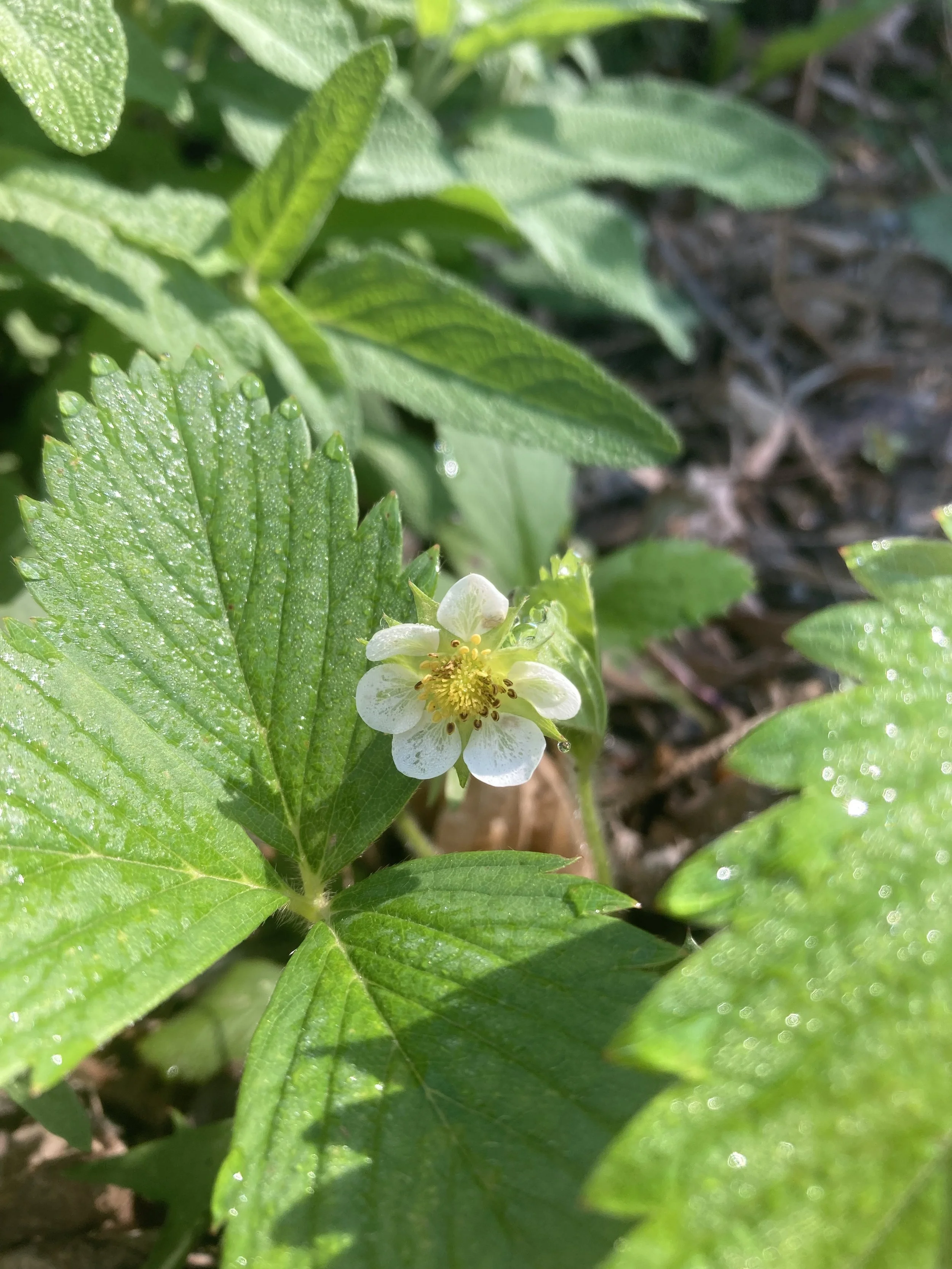
MAKING A STRAWBERRY LEAF TEA:
For this, you’ll need access to the fresh leaves (not the leaves found on the berry, the three-part leaf that grows from the root of the plant). Simply pick the leaves and let them steep in boiled water. You could also dry the leaves for later use.
✿
Delicious, precious, and jewel-like, strawberries are truly a gift of early summer. Next time you eat one, I invite you to close your eyes and relish in its sweetness. Let the fruit carry you deeper into the season—into the summer, the land, and all that it offers.